Chapter 4
Increasing Climate Ambition
Position Paper

AUDIO SUMMARY
Leveraging Opportunity
4.1The way forward: Use PA alignment and partnerships to catalyze private capital mobilization
Aligning our financial flows to the Paris Agreement and increasing our contributions to green investment in LAC is an ambitious and promising road for the IDB Group. There is a growing momentum for climate action and interest among our partners and members to do this, including public and private banks.
Institutional investors are rising to become particularly powerful potential allies to bridge investment gaps in LAC by means of green finance, given their increasing interest in net-zero initiatives and PA-aligned vehicles. The development impact of such a trajectory would be massive, as their participation would be a forceful signal for capital markets to invest in our region, allowing us to go from billions to trillions in private capital mobilization.
Accordingly, the IDB Group has the goal to harness these fast-paced capital dynamics and ensure they result in accelerated opportunities for green growth in the region. We are confident our commitment to ensuring alignment with the PA and bolstering green finance investment opportunities, paired with our ability to de-risk innovative solutions through blended finance, as well as mobilize private capital towards the Region, will be a winning formula that will make the hopes for a “green recovery” a solid reality.
4.2The road so far and what the IDB has done?
Since the signing of the PA, the IDB Group has approved more than US$20 billion in Climate Finance and built substantial knowledge on long-term decarbonization and resilience. We have also offered a broad range of technical support options to member countries and clients for furthering their alignment to the objectives of the PA (see Figure 2).
Our future work on PA alignment will leverage our ongoing contributions to net-zero and climate-resilient pathways on three key fronts: i) Flagship initiatives by the IDB Group in the LAC region that provide models for decarbonization, which can be replicated and/or scaled-up; ii) Innovative solutions and financing structures to catalytically mobilize private capital; and iii) more aggressive climate and green finance targets to ramp-up our contributions to sustainability investments in the region.
I. Flagship climate initiatives in the LAC region
We are supporting countries and clients to identify the specific policies, regulations, and investments required to fulfill their climate change commitments. Some of our efforts include:
The development of a Platform for Ministries of Finance, to ensure climate becomes part and parcel of public investment decision. At our annual meeting last year, Chile, supported by other member countries, requested that the IDB create a platform on climate change for the region’s ministries of finance and economy. We are working with countries to shape the platform around their specific needs and challenges. Emerging topics include green finance, taxation and climate risk, and sustainable infrastructure and the private sector. We expect to launch the platform soon after COP26.
Assistance provided to the Government of Chile in designing a national Climate Change Financing Strategy with three pillars, short-term priorities, links to agendas on financial instruments, private sector involvement, and policy, including the design of the LTS.
Approval of the Decarbonization Policy-based Loan in Costa Rica, a first of its kind from a development institution.
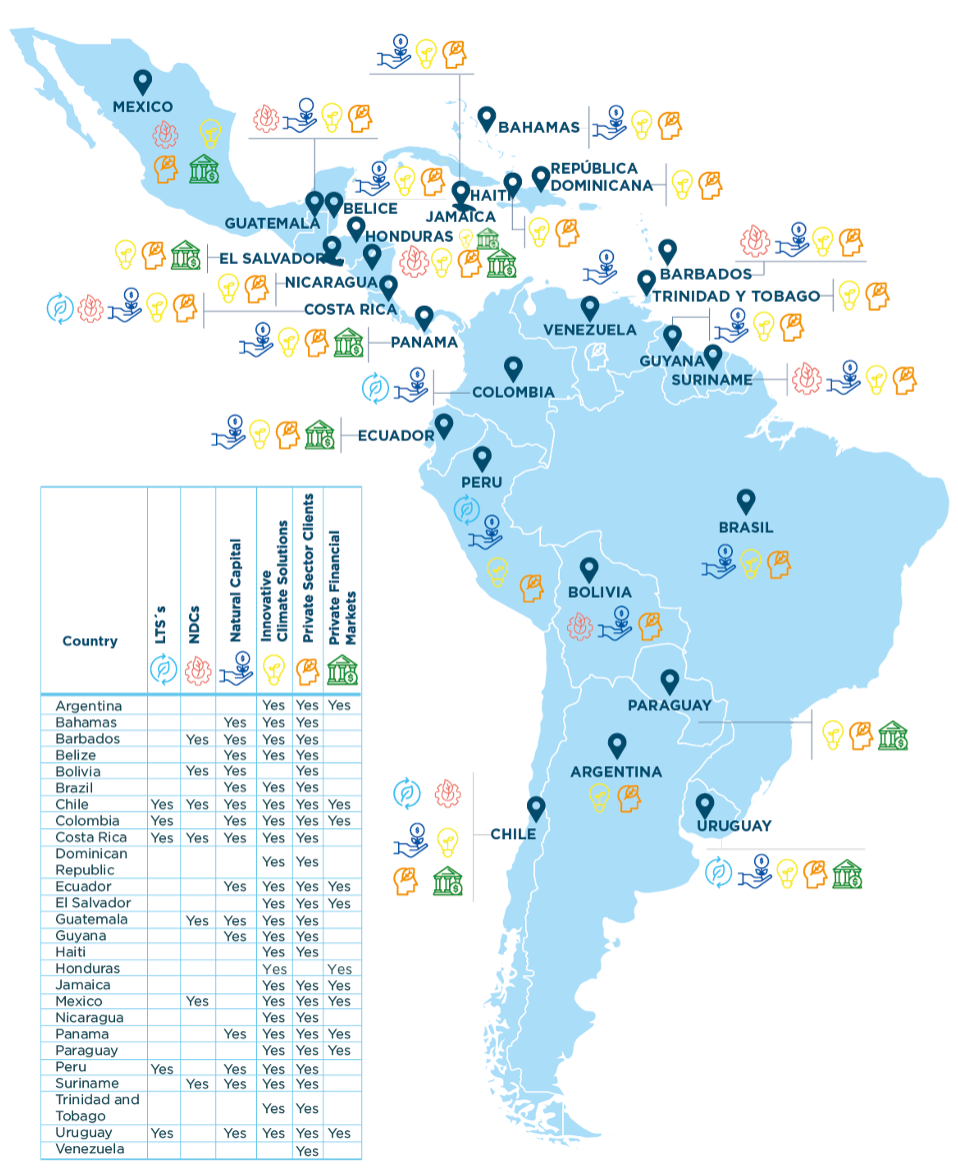
Figure 2. IDB Group's ongoing support for climate action in LAC
Support for the updating of Peru’s National Strategy on Climate Change by 2050, which incorporates a vision of carbon neutrality and long-term adaptation.
In Colombia, in addition to collaborating with the Ministry of Finance to develop a Climate Change Fiscal Strategy, the IDB Group is supporting a sustainable climate-resilient economic recovery through two main initiatives. First, by providing $US 600 M of finance for the Program for Sustainable and Resilient Growth, a Policy-Based Loan which is set to boost economic recovery using a people-centered and nature-based approach. Prior actions aim to accelerate the energy transition and support models to sustainably manage natural capital and to promote a circular economy. The exceptional foresight and ambition built into the reforms of this program has allowed the IDB to leverage an additional US$606 M in donor funds. Second, we are supporting Colombia Sostenible, an initiative by the Government of Colombia to carry out territorially focused investments that halt deforestation and trigger over 240 low-carbon and sustainable productive projects. This effort directly benefits small-scale agricultural workers, women, rural and indigenous communities, and people with disabilities in areas that have been impacted by violence; our US$100 M credit has been strengthened by a Multi-donor Fund that amounts to US$51 M in concessional finance by the governments of Norway, Sweden, and Switzerland.
On the private sector side, IDB Invest has worked on several initiatives that contribute to aligning the private investments to the Paris Accord, described in Investing in Reversing: A Sustainable and Inclusive Recovery for Latin America and the Caribbean. This work focuses on offering innovative green financial products with the ability, for example to de-risk climate investments, if clients commit to long terms net zero strategies and managing climate risks, following the TCFD recommendations.
Financial products are complemented with climate advisory services, through which we have delivered knowledge and training on topics such as strategies to define corporate sustainability policy; tools for GHG accounting; portfolio studies for climate segmentation and design of new business lines; capacity-building on measuring ESG risk, and green frameworks, among others.
II. Innovative solutions and financing structures
The IDB Group is constantly seeking to innovate in terms of the value proposition of financial products offered to countries and clients, with the aim of increasing climate action. Examples include:
Ongoing contributions to the creation of thematic bonds market, including green bonds as a new asset class for a wide range of issuers both in the public and private sector. This has provided a decisive push to the development of the green and thematic bond market – the IDB Group has backed 30% of the issuance of green and sustainable bonds in LAC, helping finance green assets, primarily renewable energy, across the region
In this regard, we are announcing during COP 26 the first ever Blue Bond in LAC and the 4th in the world. This bond, with a nominal amount of US$37.45, will provide long-term finance to eligible projects promoting the sustainable use of water resources for economic growth, improved livelihoods, and jobs, as well as ocean ecosystem health.
We are continuing in our work to increase capacity among Ministries of Finance to issue sovereign green bonds.
The IDB Group has provided technical cooperation to 40+ National Development Banks (NDBs), crowding-in around 400 commercial banks, and 27 capital market operations, leveraging more than USD 3 billion of IDB resources with an estimated support of US$ 450 million of international Climate Finance. By the same token, IDB Invest has financed 45+ commercial banks and Funds in the last years, across 16 countries in the region, providing from 2016 to date US$ 820 million, and mobilization of private sector capital close to two times that amount, with an estimated impact of reducing an estimated of 42 million tons of CO2 equivalent per year.
Through blended concessional finance, the IDB Group has helped crowd in private sector investments that would otherwise not be available to finance projects with high development impact. These funds have re-balanced risk-reward profiles for pioneering investments and enabled them to happen. To date, we have leveraged US$ 5 billion of external investment, unlocking low carbon and climate resilient investments in the region.
For every dollar of blended finance, the IDB Group is leveraging between 9-10 dollars towards climate.
IDB Invest has increased its private sector adaptation finance tenfold between 2017 and 2020, thus diversifying its Climate Finance away from typical renewable energy projects. We now have a specific team tasked with identifying, testing, replicating, and scaling successful private sector adaptation models. At the same time, we are formulating an action plan that further supports this vision.
The Accelerator Fund (ACL), which is focused on accelerating NDC investments, is one exceptional example of how relatively small amounts of grant funding deployed early can greatly improve the case to unlock the mobilization of large-scale finance for projects aligned with country-level climate goals. This Trust Fund was created in 2016, as a specific fund to target pre-feasibility assistance to accelerate investments. A recent evaluation of this ACL Trust Fund has shown that the overall effectiveness assessment at a portfolio and project level is particularly high when it comes to leveraging additional resources for projects during their pre-investment stages, with a combined leverage of USD 16.5 bn mobilized and unlocked. This is nearly 1,200 times the amount invested by the ACL funds. Even without considering unlocked markets (which amount to over 85% of the additional leveraged resources), this represents a ratio of USD 74 of mobilized resources for every dollar invested by the donors
III. More aggressive climate and green finance targets
The IDB Group has established a Climate Finance floor of 30% of our total lending volume, as well as a mandatory 40% and 65% share of projects with climate components for IDB Invest and IDB, respectively. These targets are part of the 2020–2023 Corporate Results Framework.
There has been sustained progress in mainstreaming climate, as reflected in the record high share of projects supporting climate change. Thus far in 2021, IDB and IDB Invest have already achieved climate components in 69% and 58% of projects, respectively.
In 2019, the IDB Group delivered almost US$ 4.9B in Climate Finance, amounting 29% of total lending volume; in 2020, despite the best efforts by the IDB Group to sustain those levels of Climate Finance, the COVID-19 emergency generated an urgent need to support countries’ social and fiscal sectors. This substantially shifted the share of total lending channeled towards climate, which in 2020 amounted to $3.48 billion and 20% of total lending; 50% and 40% of projects had climate components for IDB Invest and IDB, respectively.
Similarly, in 2021, we ended the third quarter with $1.64 billion of Climate Finance representing 19% of our total lending volume, and conservative estimations for Climate Finance until the end of the year are close to 25% of Climate Finance, depending on how the public and private sector pipelines develop. We expect our Climate Finance to rebound as countries begin their recovery.
To build an inclusive, low-carbon, and resilient economy, the region must increase investment in sustainable infrastructure, sustainable cities, and rural development. But the “narrow” definition of Climate Finance can be counter-productive in a context of sustainable recovery. As the economic recovery takes root, the IDB Group must not only focus its attention on nation-wide impacts; but also, local environmental conditions must be a priority. Countries and private clients in the region recovery need to include not only climate financing but also reducing biodiversity loss, sound management of chemicals and other environmental threats. As the region recovers from COVID-19, it will also need financing for its local ecosystems, supporting plans for a healthy sustainable recovery.5
In this context, it is clear to us that the appetite for economic stimulus coincides with IDB Group’s intention to increase the share of resources channeled to green finance: including climate change investments but also going beyond by investing in an environmentally sustainable economy. In line with Vision 2025, enhanced corporate targets for green finance will be an integral component of IDB Group’s approach to social and economic recovery in LAC.
5Green finance investments are those that include pollution abatement, recycling and re-use, surface water, soil, and groundwater, healthy ecosystems, sustainable transport that reduces impacts connected to the movement of goods and people, environmental goods, and provision of environmental services, access to water quality efficient water supply, treatment and sanitation. Green finance is the broadening of the environmental dimensions of investments, from projects in sustainable energy and resource (water and materials) efficiency, to all other types of projects that result in physical environmental benefits.


