WHAT DOES PARIS AGREEMENT (PA)
ALIGNMENT IMPLY
FOR THE IDB GROUP?

AUDIO SUMMARY
Introduction
I. The Inter-American Development Bank (IDB Group) has taken steps to address priority items discussed during its meeting with the U.S. Treasury and other Multilateral Development Banks (MDBs) on climate change action and finance.
II. Our focus on climate change is outlined in our Vision 2025 roadmap as well as in our Second Update to the Institutional Strategy. However, we have taken the additional step of designing the IDB Group’s Climate Change Action Plan 2021-2025 that outlines how we will be first movers and leaders in Latin America and the Caribbean to address the risks of climate change and advance the goals laid out in the Paris Agreement. As part of our action plan, the IDB is committed to:
a. Full Paris Agreement alignment of new operations from January 2023 onward, including the strengthening of all strategic building blocks for alignment.
b. Development of Country-Centric Approaches to Paris Alignment.
c. Internal and External Knowledge and Capacity Building.
d. Improved Corporate Incentive Structures for promotion of climate projects.
e. Expanded use of innovative solutions, tools, and financing structures.
f. Movement toward a more ambitious climate target, from a 30% floor to a 40% floor of green finance in the next four years, subject to country demand.
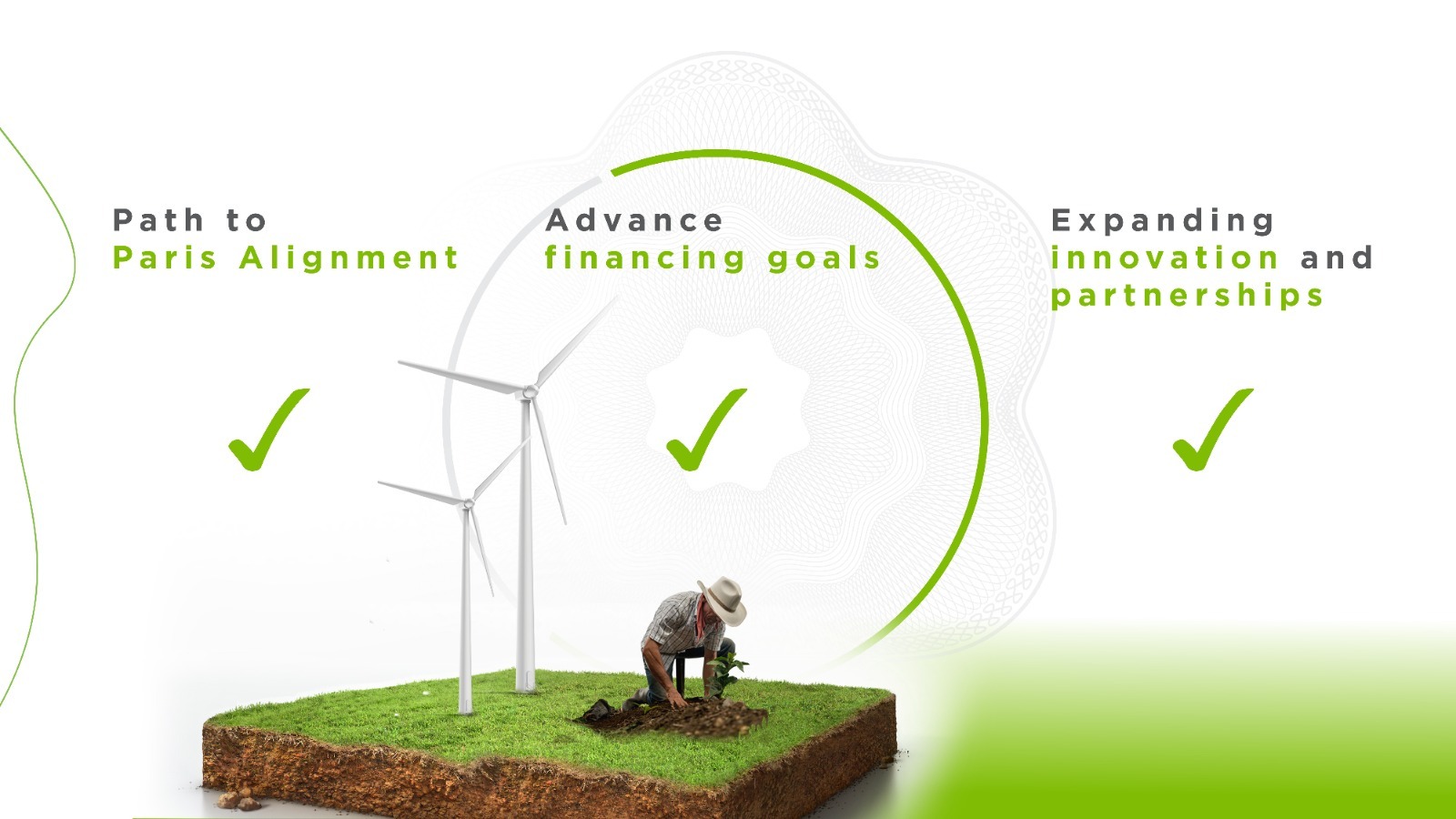
Below we provide an overview of our advances to date on each of these priority areas.
WHAT DOES PARIS AGREEMENT (PA) ALIGNMENT IMPLY FOR THE IDB GROUP?
As opposed to enhancing activity-level contributions to mitigation or adaptation objectives –as we have been doing through our Climate Finance targets– ensuring the alignment of everything we do with the net-zero and climate-resilience goals of the PA will require a mindset shift for the IDB Group: From a short-term incremental approach focused on the volume of resources channeled to climate investments, to a long-term vision centered on facilitating the conditions for decarbonization across all activities, inextricably linking economic development with bottom-up resiliency in LAC communities.
In the context shaped by the COVID-19 pandemic, the challenges ahead could not be any clearer: we must strive to work cross-sectorally, hand-in-hand with countries–particularly with their Ministries of Finance and Planning; with innovative champions in the private sector; to both help client countries respond to the COVID-19 crisis, and support a sustainable recovery aligned with the principles of the PA. The IDB Group, with its capacity to tap into a wide and diverse network of partners, is exceptionally well-positioned to identify and leverage the synergies between green recovery and economic recovery, with particular attention to health, jobs and the needs of the poor and vulnerable in LAC.
IDB’S ROADMAP TO PARIS ALIGNMENT
All 26 of the IDB Group’s borrowing member countries have signed the PA, signaling the LAC’s strong interest and commitment to achieve its main aims: (i) limit the global temperature rise this century to well below 2°C—aiming for 1.5°C—above preindustrial levels; (ii) reduce vulnerability and increase climate resilience; (iii) make finance consistent with a pathway towards low GHG emissions and climate-resilient development.
The very structure and governance of the PA places the focus for its implementation on countries.1 In accordance, MDBs’ joint climate action commitments under the PA–announced at One Planet Summit (2017)– are to facilitate countries’ alignment with the PA through climate-consistent financial flows. To be successful, these efforts must be owned by countries and firmly grounded on national priorities, as reflected in Nationally Determined Contributions (NDCs) and Long-Term Strategies (LTS). MDBs consider them the compass of our efforts to enable and drive low-carbon and resilient investments in line with a green post-COVID recovery and beyond.
A firm grounding on national realities and client’s business models is a fundamental feature of IDB Group’s PA alignment process; this is what fosters country-ownership and realistic implementation mechanisms to fully deliver on country-level PA commitments.
In this context, the IDB Group seeks to achieve full Paris alignment in its operations from 2023 onwards. This commitment is structured on a client-centered approach that will reflect the principles of the Climate Convention of common but differentiated responsibility and capabilities, in acknowledgment of the need to consider current and historical emissions levels, climate vulnerability and economic capabilities of counties, when distributing any burdens associated to this transition.
This demand-driven process of alignment will not only contribute to making our own financial flows consistent with temperature and resilience goals in Article 2 of the PA, but it will also –and perhaps most importantly– offer models that countries in our region will use to fully deliver on their commitments and integrally transform their economies. This will add value and create knowledge on how to harness the unique opportunities, new jobs, and innovative markets created by decarbonization and climate resilience, while putting in place mechanisms to equitably manage their costs and risks. In this regard, the application of long-standing approaches at the IDB Group, such as the gender-lens and integrate territorial development models, will be key in identifying the net-zero alternatives that are the smartest and most just pathways for our region.
The ratification process involves the submission of the country’s first nationally determined contribution (NDC) no later than when the Party submits its respective instrument of ratification, acceptance, approval, or accession. NDCs depict the mitigation and adaptation measures that will be pursued domestically to attain the objectives of the PA. They are to be reviewed every 5 years and include the progress on the actions and targets outlined.


